
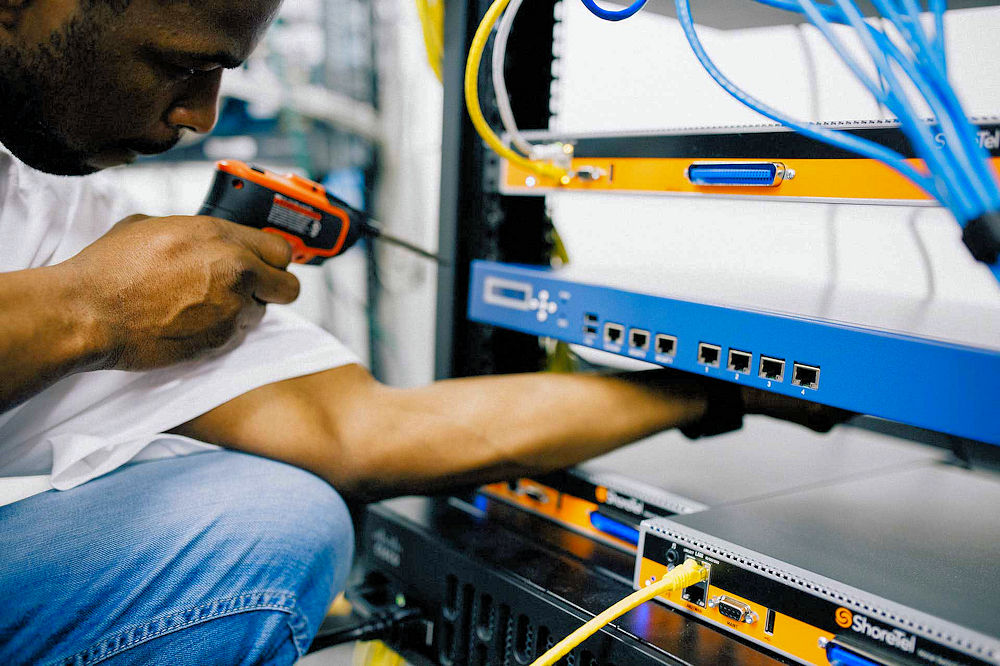
As communications technology keeps advancing, connectivity speeds keep climbing right along with it. High-speed digital fiber optics have replaced older copper-based technologies as the preferred medium for high-speed connections. Today, most commercial buildings run on more than one type of connection — including structured cabling — capable of moving data at increasingly faster rates.
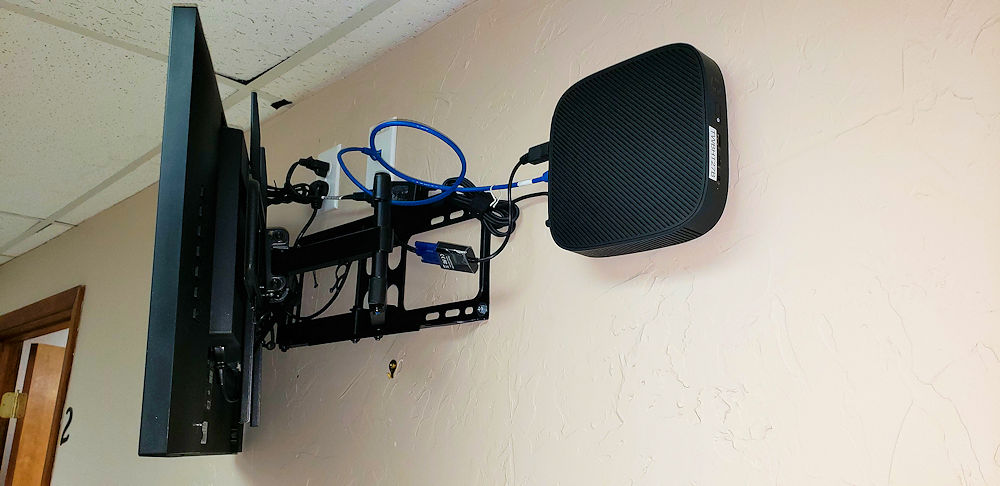
What is Fiber Optics?
Fiber optics is a transmission method that uses pulses of light, carried through thin strands of glass, instead of electrical current traveling through copper wire. A single strand of optical fiber can transfer up to 10 gigabits of data per second — far beyond what copper wiring can support — and fiber doesn’t need the signal-boosting repeaters that copper runs require over long distances, since light signals travel much farther with far less loss.
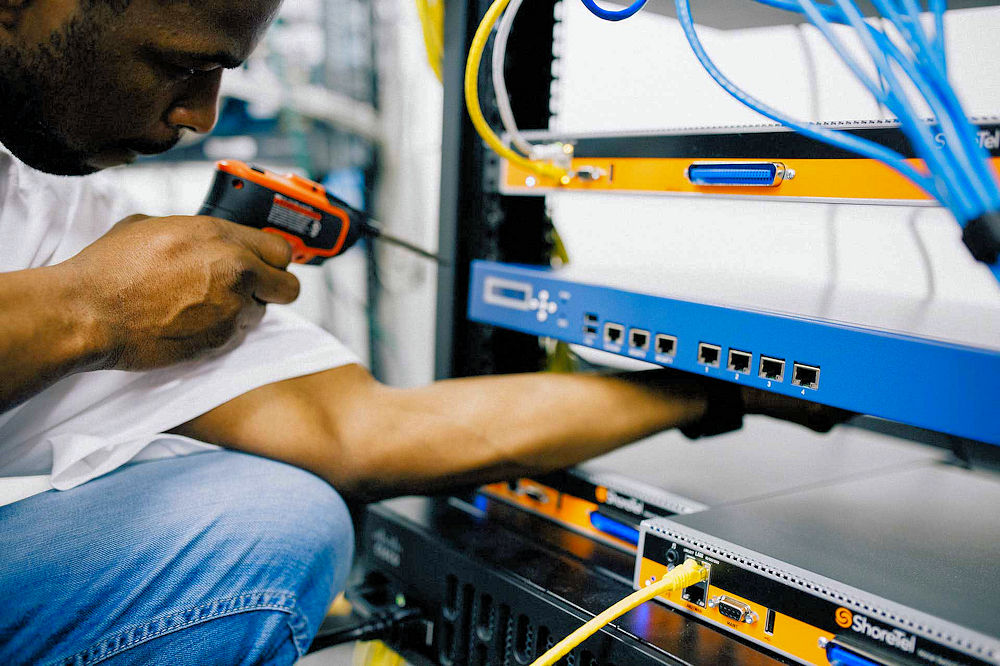
A Brief History of Fiber Optics
Fiber optic communication was pioneered by physicist Charles Kao in the 1960s, who theorized that light could carry information across long distances through glass fiber with far less signal loss than existing methods. It took years for the technology and manufacturing processes to catch up to the idea, but today fiber optic networks span the globe, from major metro backbones down to individual office buildouts.
How a Fiber Optic Network Works
At a basic level, a fiber optic link works like this: a transmitter converts an electrical signal into pulses of light. Those light pulses travel down the glass fiber core, reflecting internally along its length. At the far end, a receiver converts the light pulses back into an electrical signal the connected equipment can use. Because the signal is carried as light rather than electricity, fiber optic lines resist electromagnetic interference from nearby equipment, power lines, and radio frequency noise far better than copper — which makes them a dependable choice for demanding data environments.
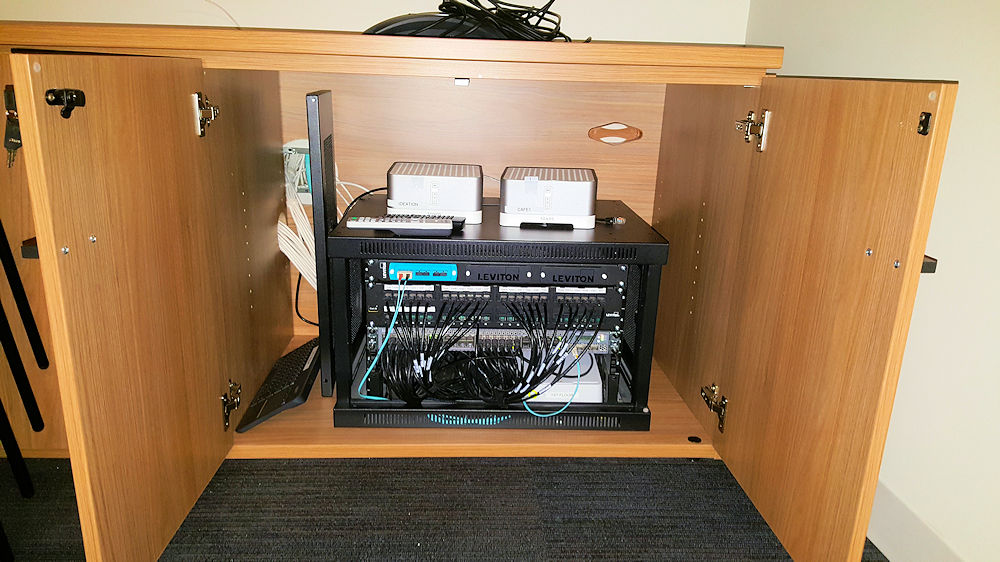
The Most Common Uses for Fiber Optics
Fiber optic cabling shows up in more places than most people realize:
- Telecommunications and data transmission — the primary use case, moving large volumes of data quickly between buildings, floors, and equipment racks.
- Internet backbone and broadband delivery — connecting buildings and neighborhoods to high-speed internet service.
- Industrial and manufacturing environments — monitoring equipment, tracking inventory, and connecting automated systems where interference resistance matters.
- Medical equipment — powering imaging devices and diagnostic equipment that depend on fast, interference-free data transfer.
- Energy and utility infrastructure — supporting monitoring and communications across distributed sites.
Fiber Optics vs. Wireless Networks
Fiber is often compared to the latest wireless technologies, since both can move large amounts of data without a hardwired connection to every device. Fiber generally wins on three fronts:
Speed
Fiber optic networks can sustain significantly higher throughput than current wireless standards, especially under sustained, heavy usage.
Reliability
Wireless signals are affected by physical obstacles like walls and interference from other equipment. Fiber, carried as light through glass, isn’t subject to that kind of interference.
Cost Over Time
Wireless networks require ongoing equipment and maintenance to keep coverage strong. A well-installed fiber backbone, tested and documented at installation, requires far less ongoing intervention.
Fiber Optics Is the Future of Business Connectivity
As bandwidth demands keep growing, fiber optic infrastructure is becoming less of a luxury and more of a baseline requirement for commercial buildings. If you’re planning a new buildout, an expansion, or an upgrade from aging copper infrastructure, our team can help you design and install a fiber optic cabling system built to handle what your business needs today, with room to grow. Contact us for a free consultation.